Velouria – If it doesn’t exist…
design it, Build it, Ride it
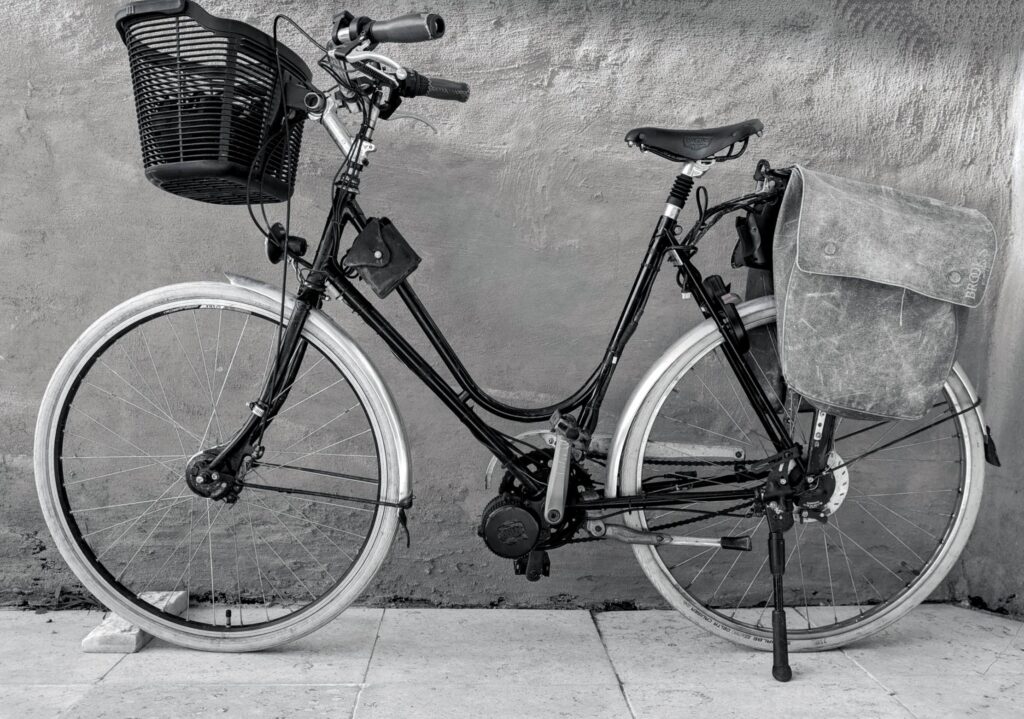
Velouria is a steel step-through roadster built around 700C wheels and modern low-trail geometry. It combines the stability and elegance of classic European roadsters with lighter construction, precise steering, and the structural advantages of the Frascona curve. Commissioned by Slowcycles and designed by Velouria (Constance Winters) of the Lovely Bicycle blog, it is now offered to Bella Ciao for the global market..
It comes with the basic frame & fork box, and separate recommended options:
- Box 1: Velouria frame & fork. Made/boxed in Italy, shipped from Germany to global customer
- Box 2: Optional – all the components used in Bella Ciao bicycles
- Box 3: Optional: Bafang BBS01 ebike kit that has been proven on the Velouria for 9 years
- Or, come to Berlin, collect your ready-to-ride Velouria and explore a lovely city
The Box offer is intended for skilled bicycle enthusiasts who have experience assembling bicycles from component parts, and for independent bicycle shops who build bicycles for retail customers, either built to order or to carry inventory for sale, without the commitment of becoming a Bella Ciao dealer.
The ready-to-ride option is similar to the Bella Ciao Neorealista, but differs in the geometry of the frame, which is designed to produce a more responsive, low-trail ride, while remaining a true roadster. In layman’s terms, the tubes are the same material, but the lengths and angles are different, resulting in a distinctly different riding character that merits its own model name: Velouria. Where the Neorealista sits in a conventional mid-trail range, the Velouria introduces a true low-trail option within the same category.
Technical
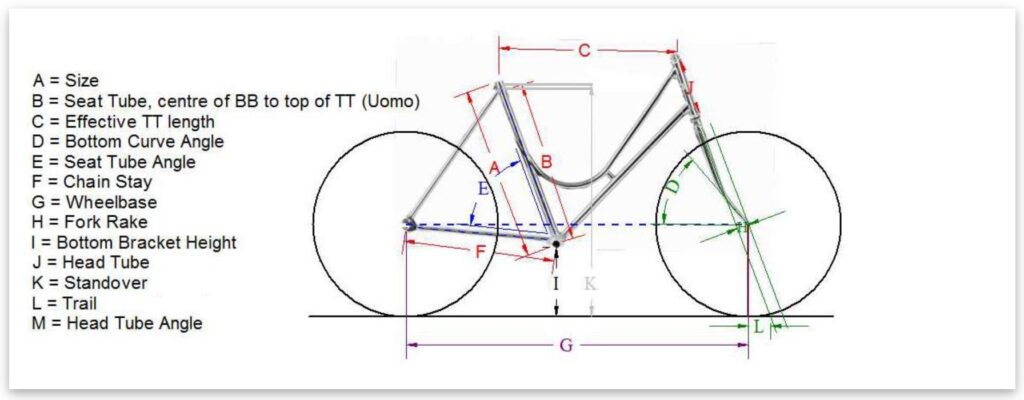
Trail is the distance by which the front wheel follows the steering axis on the ground, and it determines how stable and self-correcting the bicycle feels. The trail of the Velouria is approximately 37 mm, giving light, precise steering and calm, controlled handling, particularly when carrying a front load.
Trail is not an isolated number, but the outcome of how head angle, fork rake, and wheel size are brought into balance. Small changes in these relationships produce markedly different behaviour, from quick and reactive to calm and composed. In the Velouria, these elements are resolved together to create a bicycle that feels intuitive, composed, and easy to ride from the first moment.
This is achieved through a shallow head angle combined with a 70 mm fork rake. Rather than the higher trail figures typical of touring or racing bicycles, the Velouria uses deliberately low-trail geometry to create a more intuitive and balanced ride at everyday speeds. The result is a bicycle that feels steady without heaviness, responsive without nervousness, and naturally composed when fitted with a front rack or basket.
The rear geometry is longer to improve ride smoothness, load-carrying stability, and overall directional security. The seat tube angle positions the rider slightly further back over the rear wheel, shifting weight off the hands and onto the saddle, producing the relaxed posture and comfort that riders immediately notice.
The high-tensile steel fork absorbs road shock through its natural flex, achieving with a single piece of steel what modern suspension systems attempt with springs, seals, and linkages.
About this Page
Slowcycles owns the Velouria designs and the rights. However, the business plan was never put into effect, and it would be a shame to not bring them to the world. The Velouria addresses a market that has been neglected by the major manufacturers who follow trends, not lead them.
The purpose of this page is to present the concept to the new owner of Bella Ciao to encourage him to make the frame/fork combination and market it worldwide. The prototype has been tested since 2017 and performs brilliantly. Slowcycles would be happy to give Bella Ciao ownership of the design and rights at no charge, provided it agrees to carry the product and sell it worldwide.
Box 1: The global market has changed from the days when bike makers signed up distributors, especially if the components are generic, such as Shimano or Tektro. The minimum business plan calls for the Italian frame maker to box up the painted frames and forks, trucked to Berlin, and sold online where all the Berlin warehouse does is affix the shipping label and ship using DHL’s special German global rate of up to €100 for 10kg 120x60x60 box. The market would be both bike enthusiasts who can assemble their own parts, and the casual bike store that would not become a dealership, but assemble to order.
Box 2: The next level of business plan is a second box that contains all the components the Bella Ciao assembly factory puts on its bicycles. More complicated, but helpful especially for remote customers.
Box 3: The third level opens the Bella Ciao to those regions with hills. For 9 years the Velouria prototype has been tested with the Bafang BBS01 ebike motor kit. Bella Ciao could offer to become a distributor and ship the kit in Box 3, or they could just provide a link to Bafang with the recommended configuration.
Or: Finally, Bella Ciao could offer the fully assembled Velouria through its current marketing channels. It’s no different than the Neorealista except for the ride – more comfortable and secure geometry.
The Frame and Fork
The Velcouria frame and fork is not a collection of independent dimensions, but a complete geometry system in which each parameter works with the others. The critical variables were carefully specified:
- Effective top tube
- Chainstay
- Wheelbase
- Fork rake
- Trail
- Head tube angle
The bicycle design was approached as a dynamic system rather than a set of fashionable numbers. Modern frame design often treats geometry variables independently, adjusting one dimension without fully accounting for its effect on the others. Velouria began with the desired riding behaviour, specifying the geometry accordingly.
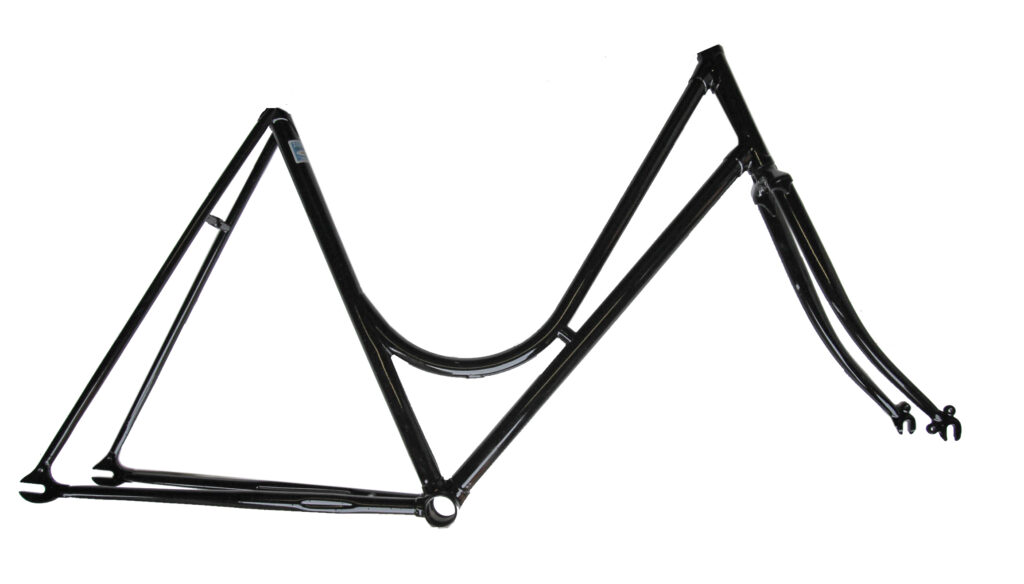
The original brief called for 15 variations, with different rider sizes, different wheel sizes and both a Diamante (traditionally men’s) and Frascona (traditionally women’s) frame shape. But after the Frascona frame was made, it became clear it was superior to the traditional high-bar double triangle design. The diamante frame was dropped, with only the 700C wheel size, for three frames: small, medium and large.
Why this matters
Most bicycles sold today are not designed for how people actually ride. They are designed to sell. The industry takes machines built for racing or rough terrain, copies their features, and offers them to ordinary riders as if those features still make sense. What is being sold is not function, but an idea of performance. It is like adding Toyota Racing Division stripes on an automatic Corolla.
The 2×12, drop handlebar bike is built for speed under competition. The flat bar, beefy frame mountain bike is built for control on steep fire trails. Both were right for what they were designed to do. But when those designs carry over into everyday use, they become fake. The rider sits wrong. The controls are wrong. It is not fit for purpose. The outcome is a complete disconnect. The customer does not know any better because that’s what the bike shop recommends and the shop sells whatever their suppliers send them. Too often the bike ends up slowly rusting away in the garage until it is rubbish-day scrap.
The Velouria has a completely different provenance. In 2009, Velouria (Constance Winters) knew nothing about European city bikes. Over the next eight years, she taught herself, not in theory, but through direct experience. She learned how geometry, materials, and assembly affect how a bicycle feels and performs.
She did not set out to design a bike for others, and would not have presumed to tell a manufacturer how to build one. It was only when Slowcycles approached her and asked her to design her ideal bicycle that she put that knowledge into a coherent set of specifications for manufacture.
The Velouria was not designed to sell. It came out of years of riding and writing about lovely bicycles.
The Frascona Curve
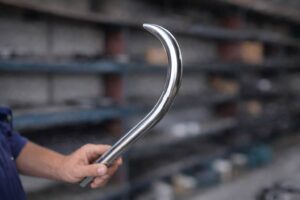
The Frascona curve is an elegant bend of steel tubing that plays an important structural role in the frame. In a conventional step-through bicycle the structural load path between the head tube and the bottom bracket is interrupted. Forces must travel through several joints and smaller members before reaching the drivetrain area. This indirect path introduces torsional flex and reduces steering precision.
The Frascona curve instead carries that load through a single continuous structural member. The curve creates a direct path between the head tube and the bottom bracket, allowing the primary forces of steering and pedalling to travel through one uninterrupted tube.
As a result the step-through frame becomes significantly stiffer under steering and pedalling loads while retaining the accessibility of a low frame. In other words, the Frascona curve addresses the traditional weakness of the step-through design rather than merely disguising it
This is not a “women’s bicycle.” It is a more human-scaled design that benefits riders of any gender. The curve itself is also a rare craft. Forming it requires a specialised bending tool and the experience to use it correctly in frame building.
Historically, the drop frame was introduced to accommodate riders wearing skirts. The Frascona curve, however, provides advantages that go beyond that original purpose. In city riding one frequently arrives at an intersection where the signal is red but pedestrians are crossing. Riding through the crossing may be unsafe or illegal. The low frame allows the rider to step off quickly, sometimes keeping one foot on a pedal and walking the bicycle through the crossing, then remounting smoothly once clear.
The curve also lies close to the natural balance point of the bicycle, making it comfortable to lift when carrying the bike up stairs.

Within the world that grew around the Lovely Bicycle movement, the curve represents more than practicality. It is graceful and distinctive, a visible piece of frame building artistry. On the Velouria it becomes both a structural solution and a visual signature.
The Frascona curve is a detail that says this is a bicycle built by a small European workshop not a mass manufacturer.
geometry and Steel Science
The Velouria is a modern low-trail roadster built around 700C wheels in a steel step-through frame. Very few builders have attempted such a combination, and mostly only by bespoke artisans who charge thousands.
In character the Velouria combines the stability and comfort of the classic 1920’s Raleigh DL-1 roadster with the modern materials of an Italian comfort road bike, known for its light and precise steering.
- The shallow head angle combined with the 70 mm fork rake produces a trail figure that gives a stable and predictable ride.
- The rear geometry is longer than most modern bicycles. This improved ride smoothness, load carrying stability, and overall directional security.
- The seat tube angle placed the rider slightly further back over the rear wheel. This shifts weight off the hands and onto the saddle, producing the relaxed posture and comfort that riders immediately notice.
- The hi-tensile steel in the fork absorbs shock through its natural flex, achieving with a single piece of steel what modern suspension systems attempt with springs, seals, and linkages.
Recommended configuration
- Recommend Cerakote Coating for the frame & fork including optional clear coat over unpainted steel
- Internal bike tubes sprayed with Dinitrol or equivalent
- Stainless bolts to resist rust in salt-spray and wet conditions
- Bafang BBS01 for EU compliance, BBS02 for non-regulated countries
- The new Shimano SG-5000 5 speed hub is recommended, especially if used with an ebike kit
- 700C x 45 Marathon E-Plus tyres on a double wall touring rim
- Full fenders bolted to frame (not using compression clamp)
- North Road handlenbars (swept back, upright riding)
- Rear view mirror on the end of the handlebar
- Double luggage rack for housing the ebike battery
- Brooks saddle and leather grips if available
- Bell and lights that run day or night when riding
- Either a Shimano front dynamo hub or the ebike battery wired into the lights
- ABUS Bike Frame lock and mount for ABUS Bordo Lock
A comfortable frame & FOrk
In 2009, a woman in Boston came across a lovely Dutch bicycle chained to a parking meter, and a whole new world opened up. She started a blog, Lovely Bicycle and wrote about rediscovering the bicycle as something graceful, comfortable, and part of daily life.
It seemed impossible to simply buy an attractive, comfortable bicycle and ride it. Lovely Bicycle Blog 4 April 2009
By 2017, when she was winding down the blog, Slowcycles reached out to her to ask for one final contribution from the expertise she had developed in over eight years of exploring the world of lovely bicycles. We asked:
If you could design the ideal bicycle frame and fork that met your criteria – attractive and comfortable, what would it be?
From that came the Velouria.
Slowcycles commissioned geometry and fabrication specifications and had a prototype made by the same Italian artisan frame makers who make Bella Ciao.
But there was a problem.
While DHL offered global shipping of such a frame for €100 from Germany, from Italy it was over €3,000. So the plan was shelved. It was revived in 2026 when Slowcycles offered the plans and business plan to Bella Ciao. Based in Berlin, they could offer the DIY frame & folk kit worldwide, and add it to their product line as a blend of old and new. The comfort of the classic roadster, and the modern, light design of the urban Italian bicycle.
The eBike Kit
The Bafang BBS01 300W / 36V ebike kit has been tested on the Velouria prototype since 2017 in Auckland New Zealand. It begins every trip with a 10° hill, and then is on the back of a ferry boat with salt spray. It has performed perfectly, with no stress or damage to the frame, fork, chain, gears or components. In the EU, the kit would be the 250W BBS01. In the US the BBS02, which is more powerful. Another one of the Slowcycles fleet has run a 750W 52V motor for a decade with no damage to the frame, fork, chain or gears.
The eBike kit can fit on any Bella Ciao bicycle. It is ideal for a bike made for city and country road riding in hill country.
In the beginning
Before ebikes, Auckland New Zealand was a bicycle desert except for, in the words of the first Lovely Bicycle post: “hunched-over postures, blotchy, sweat-stained faces communicating a curious combination of misery and self-righteousness, commitment to a wardrobe of lycra or t-shirts with anti-car slogans, and constant risk of collisions with motor vehicle.
The ebike kit changed Auckland, almost overnight. It flattened the hills, enabled ordinary folk in street clothes to get around, sometimes faster than gridlocked cars and busses.
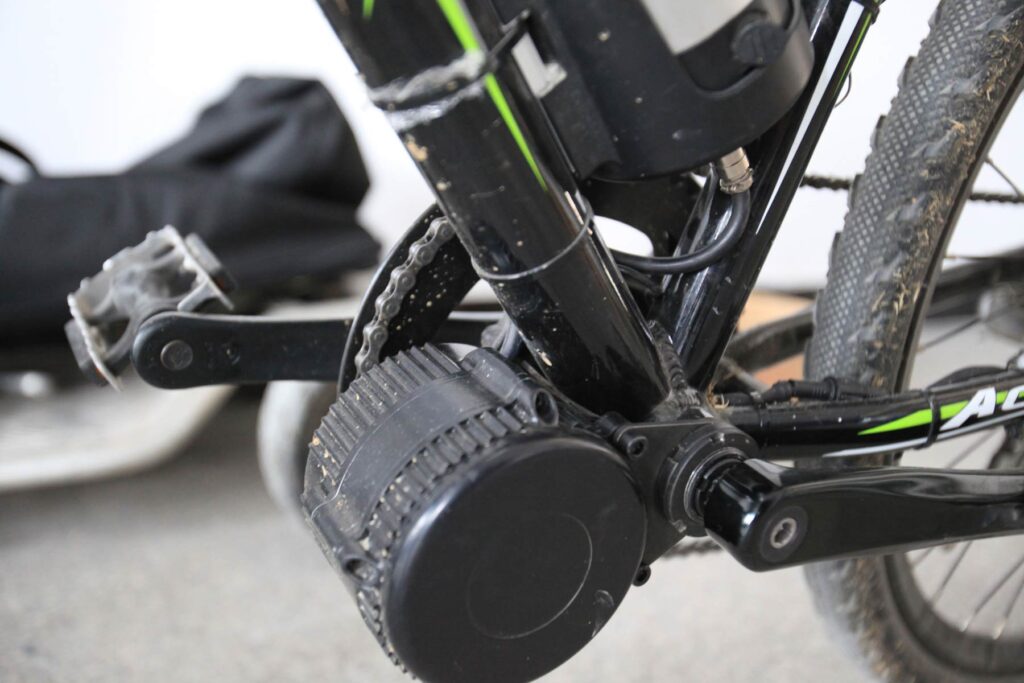
In 2013, Slowcycles visited the Banfang factory in Suzhou China, where they were invited to test the very first prototype of the BBS01 midmount motor. It was a revolutionary improvement over the hub motors: quiet, fast, with an internal controller and it drove the gears in the same way a car motor uses a transmission to maximise its power curve.
Three months later Slowcycles was provided the 17th prototype to test in Auckland for six months. At the end of that test, Slowcycles put together a buying group where 27 motor kits were purchased and installed by their owners on a wide range of bicycles. It changed New Zealand cycling.
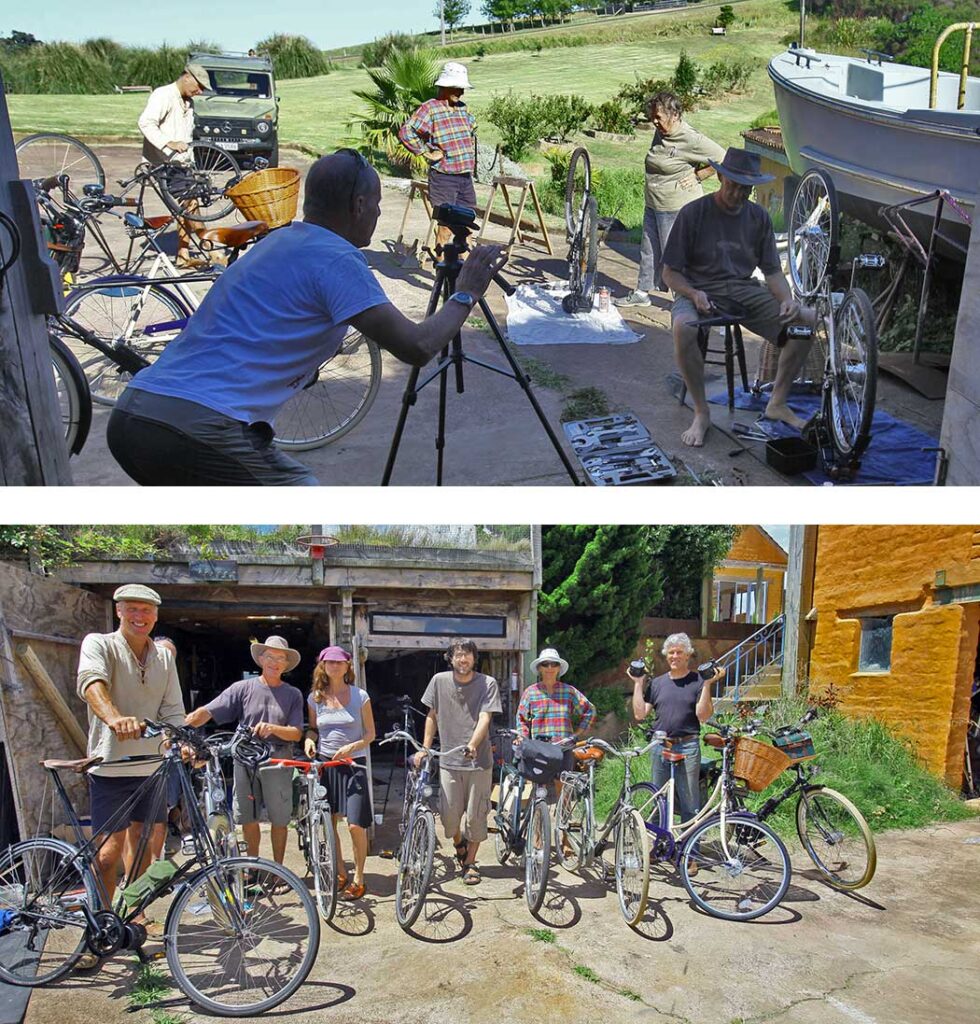
As hoped, local bicycle dealers suddenly saw mid-mount-motor-driven bicycles all over Waiheke Island, and they reached out to import them. That dealer then opened stores all over New Zealand, and soon the big bike stores took notice.
Today, there are all sorts of ebikes on NZ roads, but none reflect that timeless engineering and beauty of the superior steel-frame European urban bicycle.
The BBS01: Bafang triggered the revolution over a decade ago., and today they offer many more products than the BBS01, but they still offer the BBS01. It remains one of the most sensible motors for a refined city and country-road bicycle.
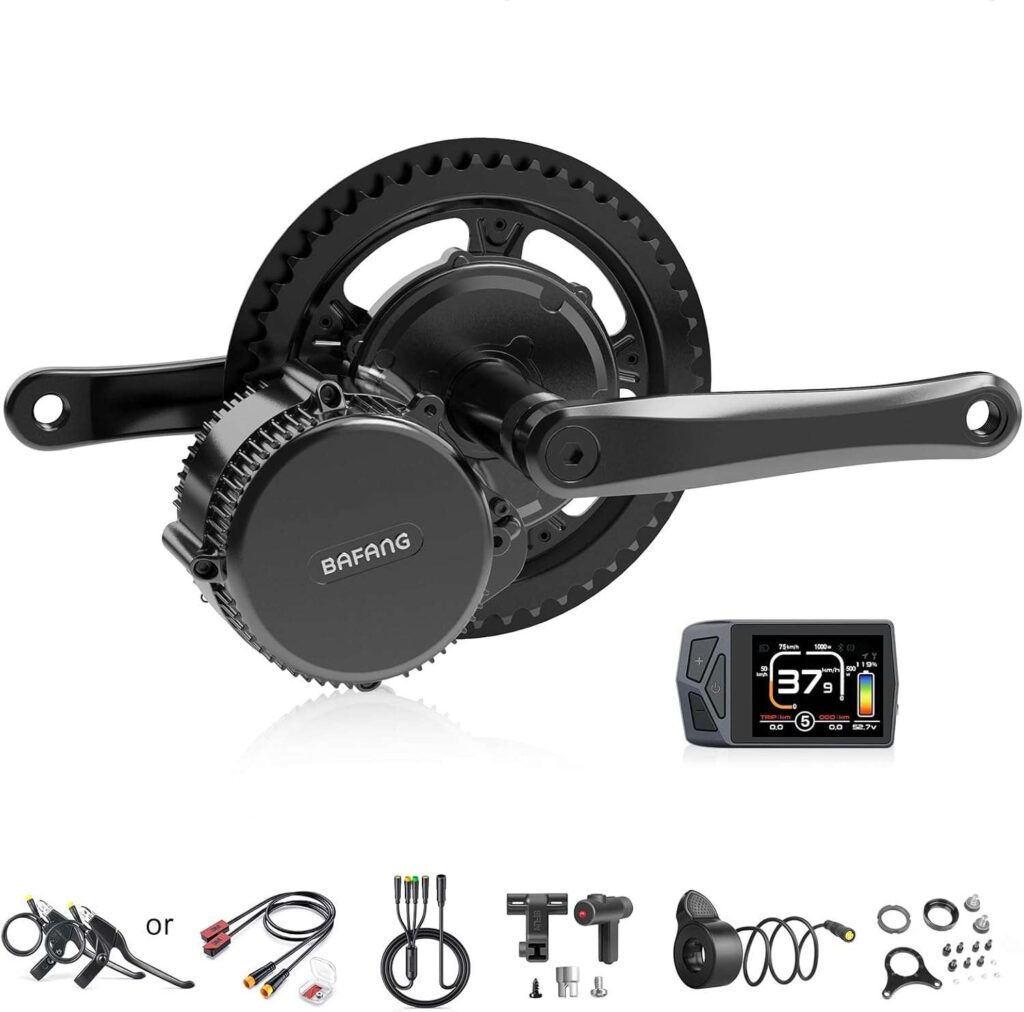
The BBS01 is a quiet 250 W mid-drive that preserves the riding character of a traditional bicycle while providing sufficient assistance for urban riding. Because it uses a standard bottom bracket interface, it avoids the proprietary frame systems used by Bosch or Shimano, allowing the bicycle to remain repairable and mechanically straightforward.
For a boutique builder, this combination of simplicity, reliability and regulatory compatibility makes more sense. It also means using a generic battery strapped to a double-deck luggage rack. When the battery wears out, a brand-specific battery tends to cost 3X a generic for obvious reasons – the brand has a monopoly. As a result, many branded-battery bikes end up thrown away. Not so with the combination of the Velouria and the BBS01
In addition to the testing of the BBS01 on the Velouria, Slowcycles has another unusual Bella Ciao Fasconca Curve bicycle that has been ridden with a 750W 52V BBSHD Bafang Motor since 2014. This bike has seen much higher stresses of a heavier rider, faster speeds, heavier luggage (including a larger battery) but its performance has been outstanding. The only failure occured recently in 2026, when the original Bella Ciao rear wheel rim developed stress fractures. It has now been replaced. While the original Shimano Nexus 3-speed hub has been a solid performer, with the replacement rim, the nex Shimano SG-5000 5-speed hub has replaced the original.